
If you are a nonprofit that cares about the environment, or your work impacts it, you are in a tricky spot. Supporters want to back mission-driven organizations, but they are also exhausted by big claims with little proof.
Here is the truth. Sustainable marketing is not about sounding eco-friendly. It is about communicating real impact in a way that builds trust. Trust drives donations, grants, partnerships, and retention.
Why eco-conscious messaging matters for nonprofit growth
Sustainability values do not just make people nod politely. They influence action.
When supporters believe your organization aligns with their values and they can see proof, they are more likely to:
- Donate again
- Become recurring donors
- Share your campaigns
- Sponsor or partner
- Recommend you to funders
In other words, values alignment fuels retention.
The biggest mistake nonprofits make: vague sustainability claims
If your messaging includes phrases like:
- “eco-friendly”
- “green initiatives”
- “saving the planet”
- “sustainable future”
and you do not follow it immediately with specifics, it can backfire. Not because people are mean, but because vague claims trigger skepticism.
The fix: be specific or do not say it
Instead of “We’re sustainable,” try:
- “In 2025, we diverted 18 tons of waste from landfill through our community program.”
- “We reduced print mailers by 30% and shifted to digital-first donor updates.”
- “We changed vendors to reduce packaging and transportation miles.”
Specific equals credible. Credible equals fundable.
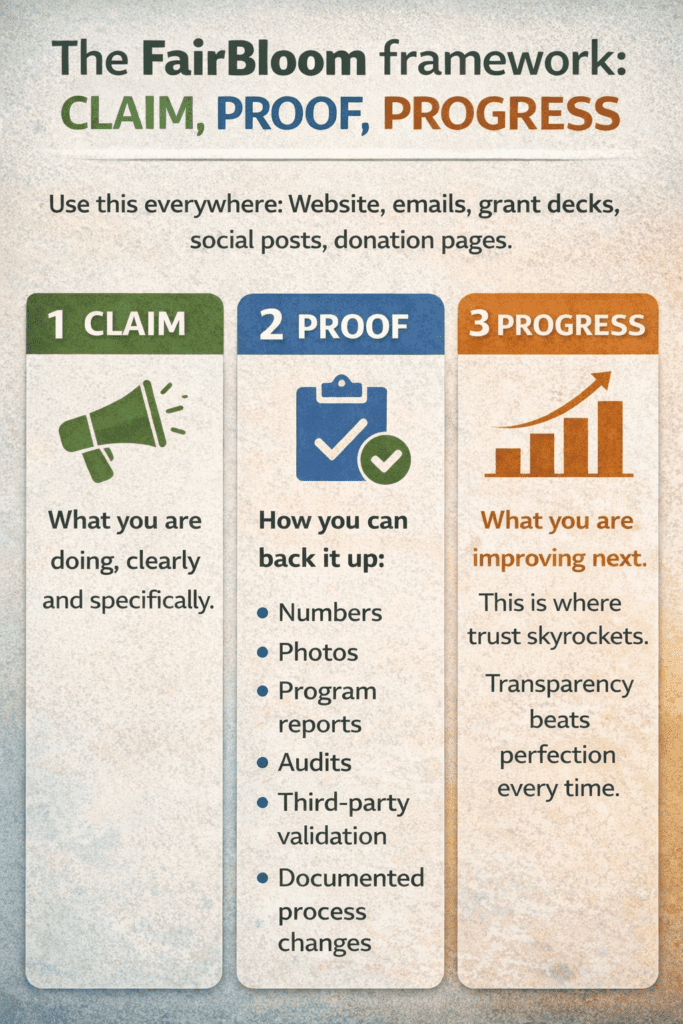
Sustainable marketing channels that work especially well for nonprofits
You do not need to do more. You need to do the right things consistently.
Your website: make it your impact-proof hub
Create or upgrade a Sustainability or Impact page that includes:
- Your environmental commitments, measurable and dated
- Your latest outcomes, with numbers
- A simple “where funds go” breakdown
- A short roadmap for what you are improving next
- 5 to 7 FAQs that answer skeptical questions
This becomes your best link for donors, sponsors, grants, and community partners.
Email: the nonprofit trust engine
Email is where you build loyalty. A simple rhythm:
- Monthly impact receipt, one proof point plus one human story
- Quarterly “what we improved” sustainability update
- Ongoing donor and community spotlights tied to outcomes
Keep it hopeful. Keep it specific. Keep it human.
Social media: show the work, not the slogans
Your best content is not fancy. It is believable.
- Behind-the-scenes program delivery
- Simple “this week we” impact posts
- Myth vs fact education
- Volunteer stories plus outcomes
If someone shares your post, it should help them explain your impact in one sentence.
How sustainability builds donor loyalty and recurring giving
People stick with nonprofits that make them feel:
- Aligned with the mission
- Confident the impact is real
- Proud to share it
That is how you get higher retention, more monthly donors, better word-of-mouth, and stronger sponsor interest.
It also makes fundraising less stressful because you stop starting from zero.
Measuring impact: keep it simple, keep it consistent
You do not need a dozen dashboards. Pick a few metrics that match your work and track them consistently.
Environmental impact metrics (examples)
- Waste diverted (lbs or tons)
- Trees planted or habitat restored
- Gallons of water saved (if applicable)
- Recycling and composting rates at events
- Reduced print materials or reduced shipping
Business growth metrics (the nonprofit version)
- Donor retention rate
- Recurring donor growth
- Email clicks to donation page
- Conversions on impact landing pages
- Sponsor inquiries after impact campaigns
If your sustainability messaging improves retention, that is not just nice. That is revenue stability.
Cost-effective sustainable marketing strategies for nonprofits
1) Run a “Receipt Series”
Once a month, share one clear proof point across:
- One email
- One social post
- One short website update
Consistency beats big dramatic campaigns that disappear for six months.
2) Pick one documented win and build a mini campaign around it
Examples:
- Reduced print mailers
- Reusable event materials
- Composting at events
- Local sourcing changes
- Operational waste reduction
Build it once. Repurpose it everywhere.
3) Invite supporters into the next improvement
This is the easiest transparency plus fundraising combo:
- Here is what we fixed
- Here is what we are fixing next
- Here is what it costs
- Here is how to help
That is mission-driven marketing with a clean conscience.
What sustainable marketing should feel like
Not performative. Not preachy. Not guilt-based.
It should feel like clear impact, real proof, and forward progress.
That is how you grow while staying true to your values.